20 Top Tips For Picking The Sceye Platform
HAPS vs Satellites: Which Wins In Stratospheric Coverage?1. The Questions Itself reveals that we have changed the way we Look at the concept of coverage
For most of the last thirty years, the discussion about reaching remote or underserved regions by air has been framed as a choice between ground infrastructure and satellites. With the advent of high-altitude platforms has provided another option that doesn't fall neatly into either of the categories this is what draws attention to the differences. HAPS aren't trying to replace satellites from all angles. They're competing for use circumstances where operating at 20 km instead of 35,000 or 500 kilometers can yield better results. The ability to determine where this advantage is present and when it's not it's the whole point.
2. This is the place where HAPS will win Cleanly
Time to travel for signals is determinable by distance. Distance is the reason why stratospheric platforms possess an undisputed advantage in structure over other orbital systems. A geostationary satellite lies around 35,786 kilometres above the equator. It produces high round-trip delays of about 600 milliseconds. These are acceptable for voice calls, but with a significant delay, problematic for real-time applications. Low Earth orbit constellations have significantly improved this, operating at 550 to 1200 kilometres and with latency within the 20 to 40 millisecond range. A HAPS car at 20 kilometers can deliver latency levels that are comparable for terrestrial networks. For applications in which responsiveness is a factor (industrial control systems, financial transactions, emergency communications, direct-to-cell connectivity -- this isn't a small difference.
3. Satellites Win on Global Coverage and That's All That Matters
No stratospheric technology currently available can cover the entire earth. In fact, a single HAPS vehicle has a limited regional footprint that is enormous by terrestrial standards, yet only a finite area. To cover the entire globe, it would be necessary to create an array of platforms spread throughout the globe, each with its own operation, energy systems, and station keeping. Satellite constellations, particularly large LEO networks, can blanket the planet with overlapping capabilities that stratospheric systems isn't capable of replicating with current vehicles counts. For applications requiring truly universal coverage (marine tracking, global messaging, polar coverage -- satellites remain the only reliable option at scale.
4. Resolution and Persistence Favor The HAPS Program for Earth Observation
If the task is monitoring an area continuously - -following methane emissions through the industrial corridors, watching the spread of wildfires in real time or monitoring oil pollution that is erupting from an offshore event the ongoing near-proximity characteristic of a stratospheric base produces data quality that satellites are unable to compete with. A satellite in low Earth orbit passes by any one of the points on the surface for several minutes at a time and has revisit intervals measured by hours or days, depending on constellation size. A HAPS vehicle, which remains in the same region for weeks delivers continuous observation with sensor proximity which enables significantly higher spatial resolution. To use the stratospheric Earth observation method, that persistence is often valued more than its global reach.
5. Payload Flexibility is a Benefit of HAPS Satellites. Satellites Can't easily match
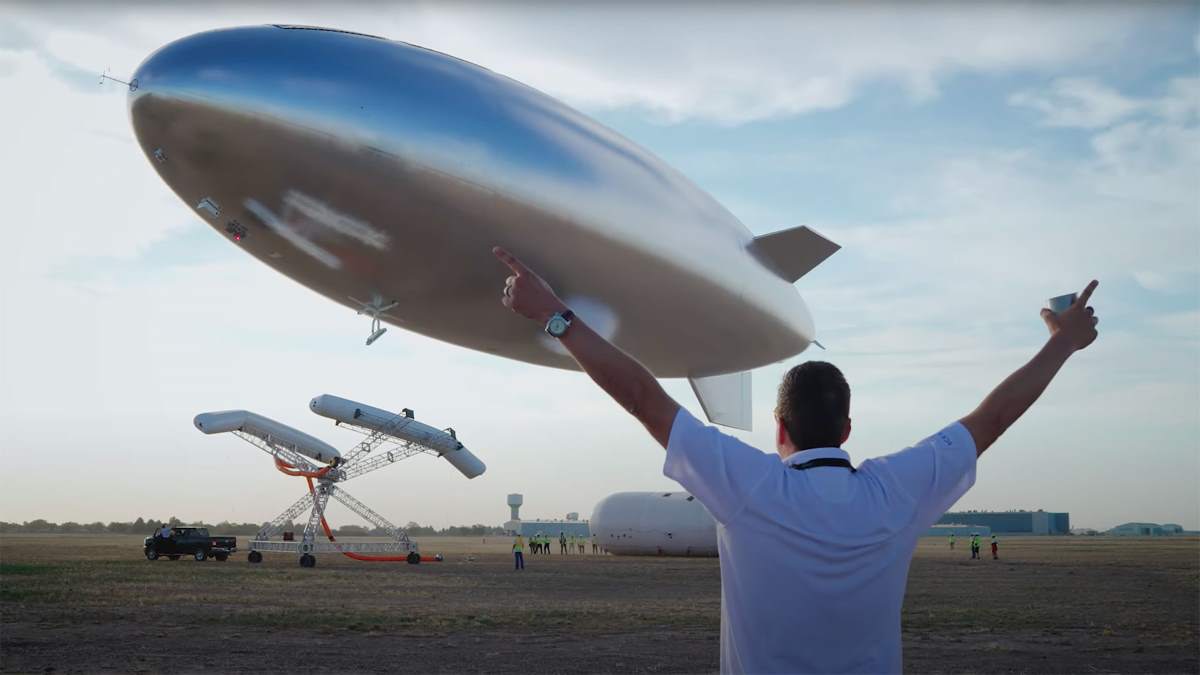
When a satellite is made, its payload fixed. The upgrading of sensors, the swapping of communication hardware or introducing new instruments requires launching completely new spacecraft. A stratospheric system returns in between missions to the ground which means its payload can be modified, reconfigured and completely redesigned as requirements change in the mission or new technology becomes available. Sceye's airship is specifically designed to support an effective payload capacity, which enables various combinations of telecommunications equipment, greenhouse gas sensors as well as system for disaster detection on the same aircraft this flexibility will require several satellites to replicate each with their own mission cost, launch slot, and orbit.
6. The Cost Structure Is Significantly Different
Launching a satellite requires rocket costs along with insurance, ground segment development and the acceptance that hardware failures on orbit are permanent write-offs. Stratospheric platforms operate in a similar way to aircrafts, and can be recovered, examined or repaired before being repositioned. They aren't necessarily less expensive than satellites on a percentage basis, but it changes the risk profile and the costs of upgrades dramatically. If you're a business trying new offerings and entering markets the capability to retrieve and change the platform rather just accepting it as an sunk expense is an essential operational advantage and is particularly relevant in the early commercialization phases that the HAPS sector is currently facing.
7. HAPS could be used to provide 5G Backhaul Even When Satellites Do Not Effectively
The telecommunications infrastructure that is enabled by a high-altitude platform station operating as a HIBS which is essentially a cell tower in the sky built to integrate with existing internet standards for mobile phones in ways that satellite access typically hasn't. Beamforming from a spheric telecom antenna is a way to dynamically allocate signals across a large area of coverage with 5G backhaul support to equipment on the ground as well as direct-to devices simultaneously. Satellite systems are increasingly capable to support this technology, but the reality of operating closer in proximity to ground give stratospheric platforms a distinct advantage in signal intensity, frequency reuse and compatibility to spectrum allocations designed for terrestrial networks.
8. Risks to Operational Safety and Weather Vary dramatically between the two
Satellites, once in stable orbit, are generally indifferent to weather conditions in the terrestrial. A HAPS vehicle operating in the stratosphere has to contend with the more challenging operational environment which includes stratospheric wind patterns such as temperature gradients, the engineering challenge of making it through the night without losing station. The diurnal cycle, which is the day-to-day rhythm of solar energy availability and power draw during the night as a design constraint that every solar-powered HAPS must overcome. Technology advancements in lithium sulfur battery energy capacity as well as solar cell performance are closing the gap, but this is the real operational problem that satellite operators simply don't have to confront in the same manner.
9. The most honest answer is that They Are Serving Different Missions.
Distinguishing satellites from HAPS as a winner-takes-all competition misreads how the non-terrestrial technology is likely grow. A more accurate picture is a layered system in which satellites handle global reach, and also applications where coverage universality is the most important factor while stratospheric platforms perform local persistence goals -- connectivity in geographically challenging environments, continuous environmental monitoring along with disaster mitigation, and 5G extension into areas where terrestrial rollouts are not financially viable. The location of Sceye's platform reflects precisely this type of thinking: a technology that is specifically designed to work in certain regions, over a long period of time, equipped with a sensor and communications payload which satellites can't duplicate at this height and close proximity.
10. The Competition Will Ultimately Sharpen Both Technologies
It is possible to argue that the growth of reputable HAPS programmes has accelerated innovations in satellites, as well as in turn. LEO the constellation operators have expanded latency and coverage density in ways that have raised the bar HAPS have to meet the requirements of competing. HAPS developers have demonstrated a long-lasting regional monitoring capabilities, which are prompting satellite operators to consider revisit frequency and sensor resolution. Sceye's Sceye and SoftBank collaboration targeting Japan's national HAPS network, and pre-commercial services expected for 2026 is one of the clearest indicators yet that suggests that stratospheric platforms are moving from a hypothetical competitor into a active part in shaping how the non-terrestrial connectivity and market for observation develops. Both technologies are more suitable to withstand the pressure. Follow the recommended Sceye Inc for website examples including sceye haps softbank partnership, space- high altitude balloon stratospheric balloon haps, what is a haps, softbank sceye haps japan 2026, sceye haps softbank, Lighter-than-air systems, softbank investment in sceye, Sceye HAPS, SoftBank investments, what are the haps and more.
Sceye's Solar-Powered Airships Will Bring 5g Technology To Remote Regions
1. The Connectivity Gap is an Infrastructure Economics Issue First
In the United States, approximately 2.6 billion people remain without reliable internet connectivity, and the reason for that is often it's due to a lack or technology. It's an absence of economic rationale for the deployment of that technology in areas where population density isn't sufficient, terrain is too difficult or the stability of the political system can't be assured to ensure a typical return on infrastructure investment. Building mobile towers over mountainous islands, arid interiors or island chains is expensive when compared with revenue projections that aren't in support of it. This is the reason the connectivity gap persists even after decades of efforts and genuine goodwill. The problem isn't the lack of awareness or even intention and it's more about the unit costs for terrestrial rollout in areas which don't fit the standard infrastructure model.
2. Solar-Powered Airships Change the Way We Deploy Economics
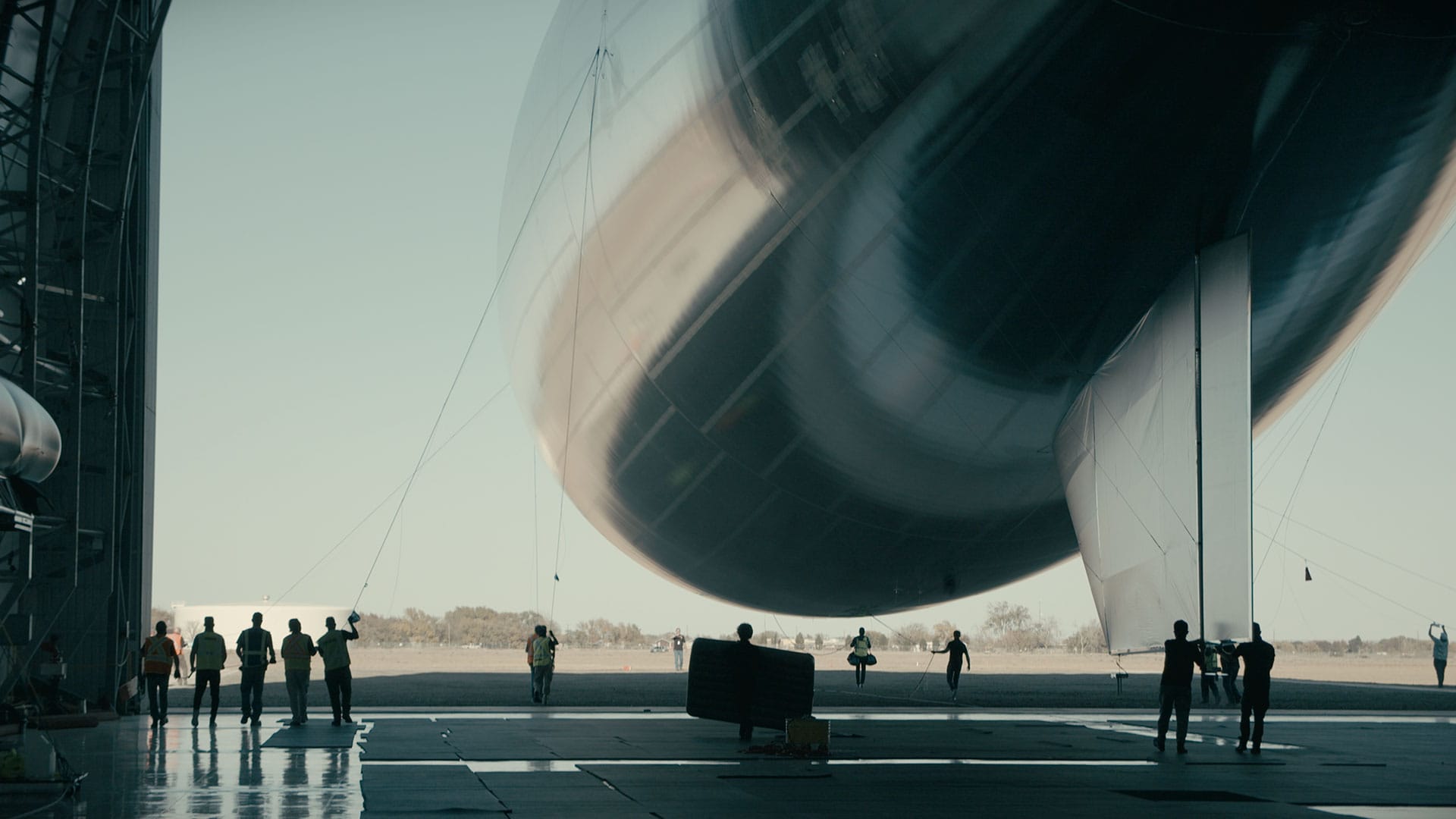
A stratospheric plane that serves as an antenna for cell phones at the top of the sky alters cost structure of remote connectivity in a way that is significant in a practical sense. A single rooftop at 20 km in altitude covers an area of ground that would require dozens of terrestrial towers to replicate, with no civil engineering and land acquisition infrastructure, and continual maintenance required for ground-based networks. The solar-powered platform removes the fuel logistics from the equation completely -- the platform generates its energy by absorbing sunlight, keeps it in high-density storage which can operate for up to 24 hours, and performs its task without supply chains reaching into remote terrain. For regions where the barrier to connectivity is primarily the cost and complexity of the physical infrastructure this is a truly alternative.
3. The 5G Compatibility Questions Are more important than it sounds.
A satellite-based broadband service is only useful commercially as long as it is connected to the devices that people actually own. The first satellite internet systems needed specially designed terminals which were costly too bulky and cumbersome for widespread use. The development of HIBS technology that is High-Altitude Intermediation Base Station standards improves this by making the stratospheric platforms compatible with identical 5G and 4G protocols that standard smartphones already use. A Sceye airship that acts as a stratospheric antenna for telecom could, in theory, serve mobile devices with no need for any additional hardware required on the end of the user. The compatibility with existing operating systems is the key difference between a connectivity solution that reaches all users in a reach area, and one which only reaches those who can manage to afford specialized equipment.
4. Beamforming Transforms a Large Footprint into a Reliable Targeted Coverage
The total coverage area of the stratospheric layer is enormous However, the extent of coverage and actual capacity are two distinct things. Broadcasting uniformly across a large area of 300 km will waste the majority of spectrum to uninhabited terrains open water areas, as well as areas where there are no active users. Beamforming technology lets the stratospheric telecom antenna focus signal energy dynamically towards the areas where there is actual demand -the fishing community on some part of the coastline or an agricultural region in another, or a town experiencing a catastrophic event in a third. This smart signal management greatly improves the efficiency of spectral energy, which can be directly translated into the power offered to users than the theoretical coverage limit the platform could provide if it broadcast indiscriminately.
5G backhaul-related applications benefit from the exact same approach- directing high-capacity links precisely towards ground infrastructure points that require them instead of spraying capacity across empty geography.
5. Sceye's Airship Design maximizes the payload This is available as Telecoms Hardware
The telecoms equipment on the stratospheric platform -- antenna arrays, signal processing units, beamforming equipment power management systems, and beamforming hardwareit is real in weight and volume. Vehicles that use the majority of its structural and energy budget just staying in air has little left over for essential telecoms equipment. Sceye's lighter than air design addresses this directly. Buoyancy drives the vehicle without continuous energy expenditure on lifting. This means that the available capacities and power sources can accommodate a telecoms load large enough to bring commercially beneficial capacity rather than a token signal spread across an immense area. Airships' design isn't fundamental to the purpose of connectivityis what makes the transportation of a huge telecoms payload alongside other mission equipment simultaneously practical.
6. The Diurnal Cycle determines if a Service Is Continuous or Intermittent
Connectivity service that functions during daylight hours and is dark at night is not an actual connectivity solution -- it's an example. To enable Sceye's solar-powered airships offer the kind of constant service that rural communities, first personnel commercial operators rely on, the platform must resolve the issue of overnight energy in a reliable and consistent manner. The diurnal cycles -- generating enough solar energy in daylight to power all equipment and to charge batteries sufficiently to continue to operate until new sunrise the most important engineering limitation. Improvements in lithium sulfur battery energy density, approaching 425 Wh/kg. Also, improvements in solar cell efficiency on aircraft in the stratospheric zone is what completes this loop. Without both durability and continuity, both remain an idea rather than a reality.
7. Remote Connectivity Is Creating Social and Economic Impacts
The motivation behind connecting remote areas isn't simply humanitarian in the abstract sense. Connectivity facilitates telemedicine and reduces the cost of healthcare delivery in areas without nearby hospitals. This allows distance education that doesn't need to build schools in every town. It provides financial services access which can replace cash-dependent industries with the efficacy through digital commerce. It also allows early warning systems of natural disasters to reach the people who are most susceptible to their effects. The effects of each one are compounded as communities increase their digital literacy and their economic systems adapt to stable connectivity. The massive internet rollout that began providing coverage to rural regions isn't just a matter of delivering an extra benefit but rather delivering infrastructure with downstream impacts across healthcare, education, safety and economic growth.
8. Japan's HAPS Network Shows What a National-Scale deployment looks like
It is believed that the SoftBank relationship with Sceye with Sceye to offer pre-commercial HAPS solutions in Japan in 2026 is important partially due to the size. A network that spans across the nation requires many platforms that offer continuous and overlapping coverage across a country with a geography is comprised of thousands of islands with a mountainous interior, long coastlines -it is precisely the type of coverage problems that stratospheric connectivity was created to overcome. Japan also provides a sophisticated technological and regulatory environment in which the operational challenges of managing stratospheric platforms of a national scale are likely to be encountered and solved in a manner that yields lessons for any future deployments elsewhere. The lessons learned from Japan will determine what's working over Indonesia as well as The Philippines, Canada, and all other countries with similar geography and coverage ambitions.
9. The perspective of the founder determines how the Connectivity Mission Is Seen
Mikkel Vestergaard's initial philosophy at Sceye believes that connectivity should not be seen as a commercial product that happens to be able to connect remote areas, but as a service with a social obligation to it. This framework influences the implementation scenarios Sceye prioritises and the partnerships it seeks to establish as well as how it presents the goal of its platforms to regulators, investors and prospective operators. The emphasis placed on remote areas or communities that are not served and connectedness that is resilient to disasters represents a notion that the layer constructed should be used to benefit those who are least well-served by the existing infrastructure. Not as a charitable afterthought, but as a core requirement of design. Sustainable aerospace development, in Sceye's words, is creating solutions to real gaps rather than enhancing service for populations already covered.
10. The Stratospheric Connectivity Layer Is Beginning to Look Like a Natural Event
For years, HAPS connectivity existed primarily in terms of a conceptual idea that brought in investment and provided demonstration flights without producing commercial services. The combination and evolution of battery chemistry, improving capacity of solar cells HIBS regularisation to enable devices compatibility and committed commercial partnerships has shifted the direction. Sceye's solar powered airships demonstrate the convergence of these enabling technologies at the moment that the demand side of things - remote connectivity and disaster resilience, as well as the 5G extension has never been better defined. The stratospheric layer that connects terrestrial satellites and orbital satellites isn't forming slowly over the top of. It is now being built deliberately, with specific areas of coverage, precise technical specifications, and specific commercial timelines tied to it. Follow the most popular softbank sceye partnership for site recommendations including sceye haps softbank japan 2026, Sceye stratospheric platforms, sceye haps softbank partnership, Station keeping, whats haps, sceye aerospace, japan nation-wide network of softbank corp, sceye careers, sceye careers, Stratospheric broadband and more.